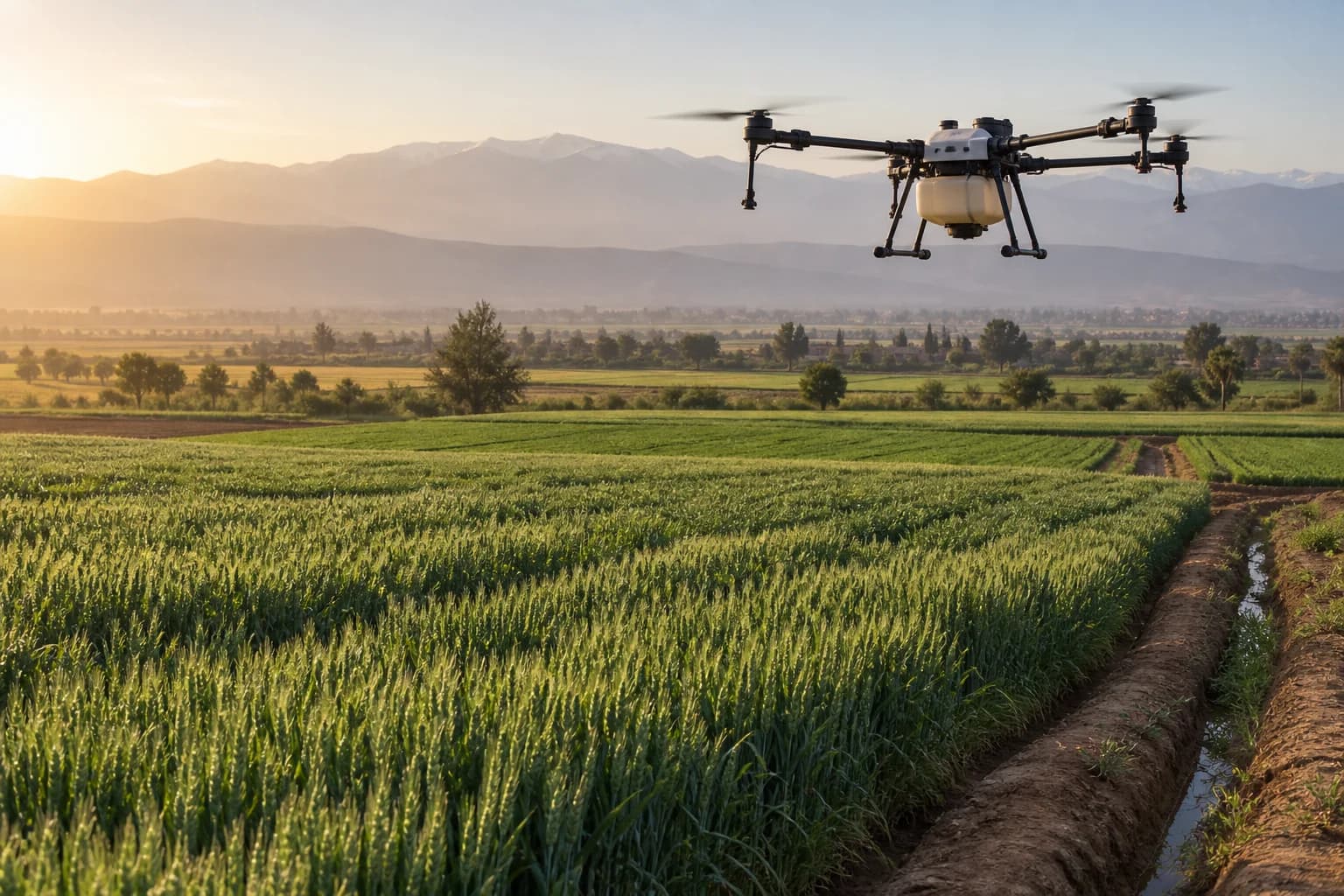
An agricultural drone is more than a flying camera. Depending on its equipment, it can observe a field, carry a spraying system or distribute granules. Its value starts with a simple question: which decision or operation could it improve on your farm?
Why this technology matters in Morocco
Water pressure makes crop monitoring especially important in Morocco. The World Bank documents declining rainfall and pressure on groundwater. In this context, better field observation can help identify where irrigation needs checking instead of treating every area alike. A drone remains an observation and intervention tool, not a solution to drought.
Source: World Bank — climate-resilient irrigation in Morocco
1. Observe crops and focus field visits
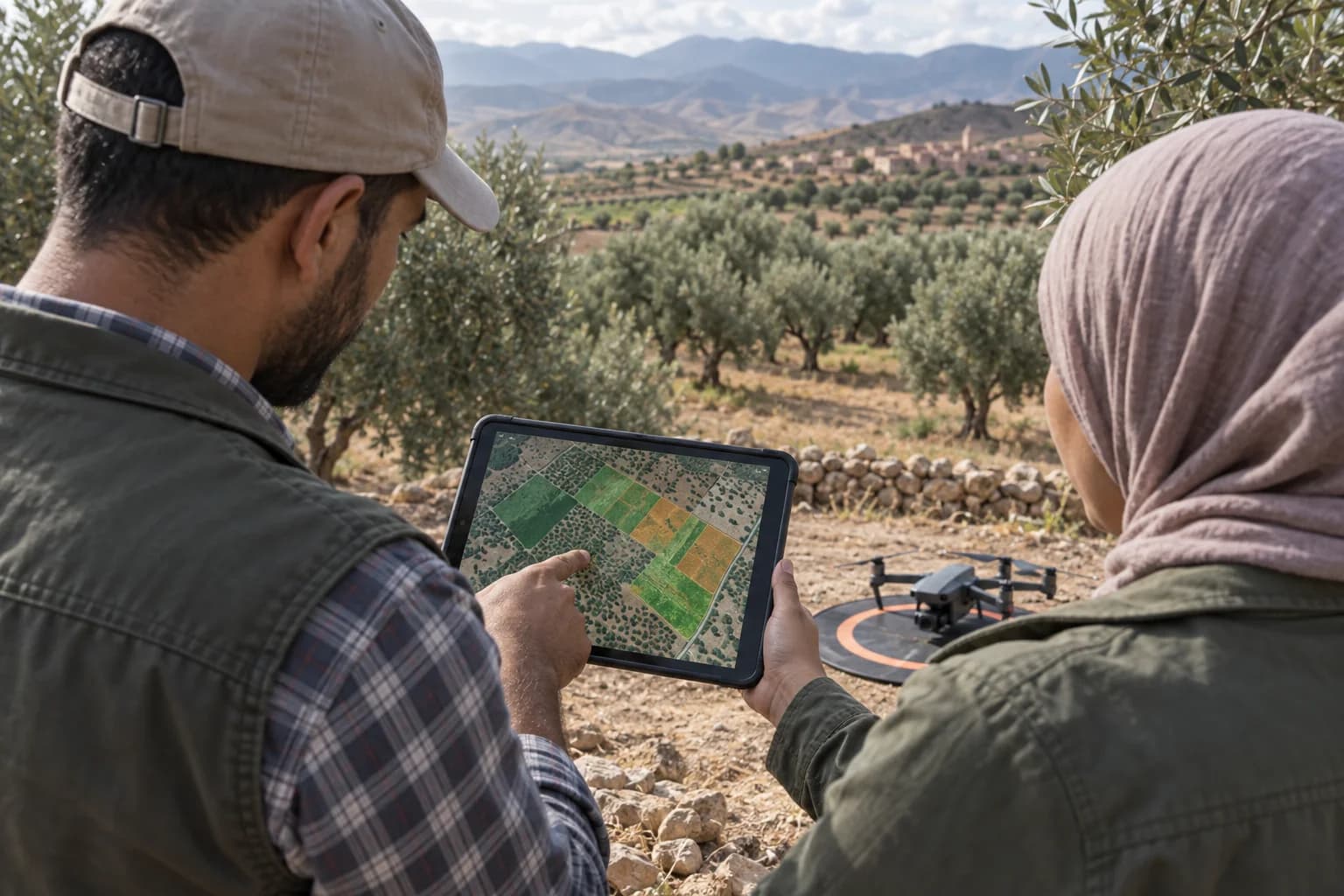
An aerial view reveals differences between areas that can be hard to spot from the field edge. FAO lists mapping and crop-health monitoring among drone applications. With the right sensor, a vegetation map can guide a field visit. A low-vigour patch is not a diagnosis: water, nutrition, pests and soil conditions still need on-site checks.
Source: FAO — drone applications in agriculture
2. Prepare more targeted operations
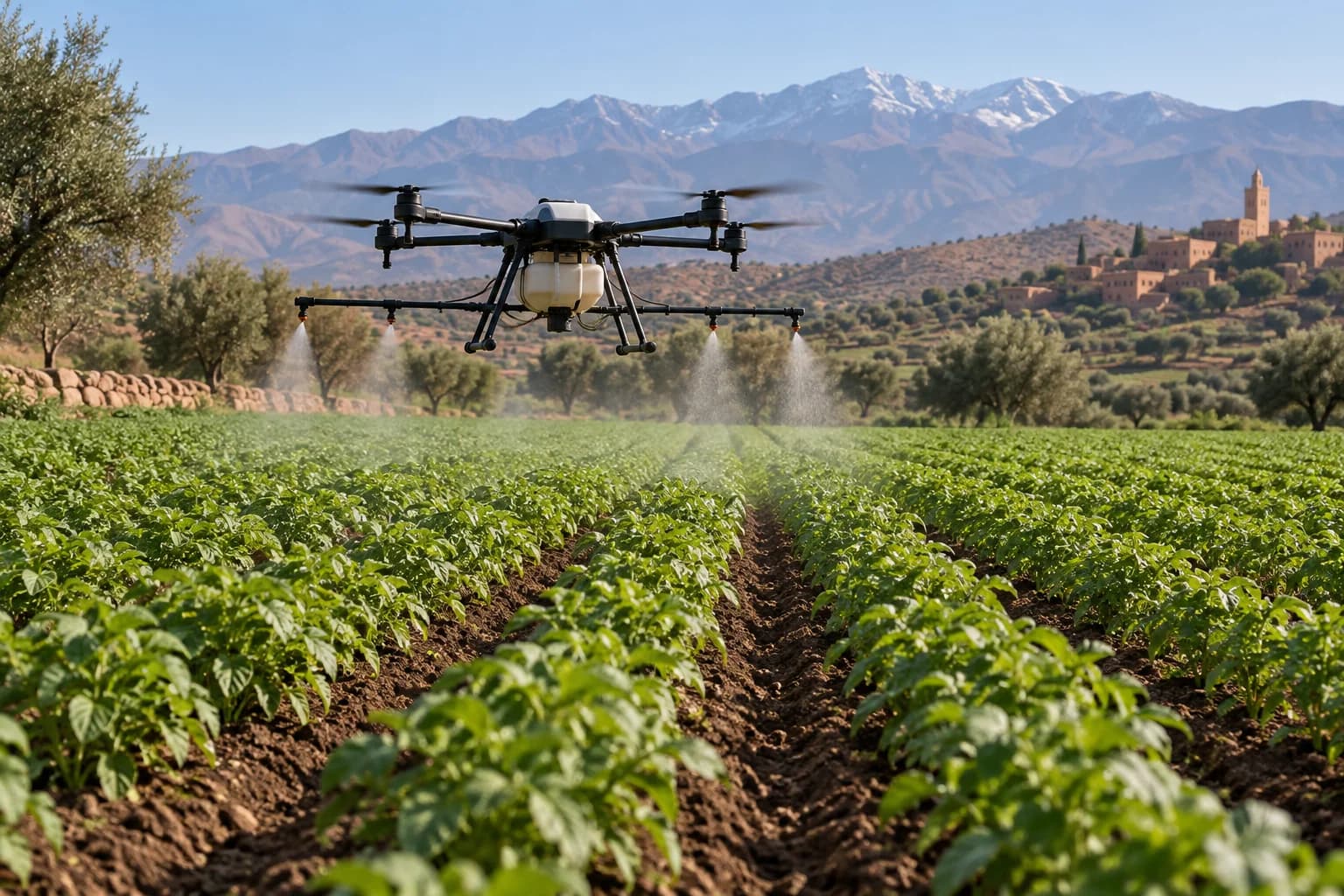
Drone spraying can be useful when ground access is difficult or a treatment needs timely planning. The drone passes above the crop without driving a tractor through the rows. But work rate depends on battery changes, refilling, obstacles and weather. Compare the full mission time, not just minutes in flight.
Precision is not automatic. Flight height, spray volume and operating conditions affect the result. Penn State also highlights drift risk in herbicide research; these technical findings are not authorization for use in Morocco. The method must be validated for the crop and product. Less spray water means neither less irrigation water nor an automatic reduction in product dose.
Source: Penn State Extension — spraying and drift
3. Assess spreading granules and seeds
With suitable spreading equipment, a drone offers another option: distributing certain solid inputs without wheel traffic through the crop. Before choosing it, ask for product-compatibility and distribution-uniformity checks. Granule size, behaviour and the load to transport matter as much as area. A drone does not automatically replace a seed drill or ground spreader.
4. Decide for your field, not a sales promise
For a Tadla farm, an orchard or a cooperative, start with a specific need: observing an uneven patch, assessing difficult access or preparing a season. Compare a complete quote with your current method: travel, preparation, labour, inputs and follow-up. A small isolated plot may suit another solution; grouping nearby needs may be worth assessing. Never assume yield gains or savings without measurement.
Questions to ask before a mission
- What problem are we solving, and how will we check the outcome?
- Are the crop, product and field compatible with the method?
- Who checks applicable authorizations, weather, obstacles and safety?
- What is included in the quote, and what report will be delivered?
Tirsoil: connecting agronomy and technology
Tirsoil is preparing a Tadla launch, with spraying as the first planned service. Spreading and mapping are planned later. Tirsoil AI is in development to help prepare fertigation plans with human agronomic review. Share your crop, location and objective through the Farm Partners programme to help shape future services, without a promise of immediate availability.